Most first commissions go wrong in the same six places, and almost none of them is comfort. A jacket can feel pleasant on and still be wrong at the shoulder seam, the collar or the cuff. What follows is the order a tailor checks a garment in.
The shoulder seam is the one thing worth being fussy about
The seam where the sleeve joins the body should finish at the outer edge of your shoulder bone, where the shoulder turns down into the arm. Run a finger along it. Past that edge, the sleeve head collapses into a soft fold and the jacket reads as though it belongs to a larger man. Short of it, the shoulder pinches and the sleeve pulls into a crease above the elbow. No dimple on top, no overhang past the arm.
Stand side-on to the mirror as well, not just face-on. The line from the base of your neck to the tip of the shoulder should be a single clean slope. Sloping shoulders, a short neck or one shoulder lower all change where that seam lands; that is why measurements include posture and asymmetry, not chest width alone. A pattern cut for a square-shouldered man will never sit on sloping shoulders, however much is taken in at the waist.
The collar, and the gap you can see from across a room
Stand naturally and turn your head slowly left and right. The jacket collar should stay in contact with your shirt collar at the nape throughout. A gap of more than about half a centimetre is a collar gap, and it is not a small defect: from behind it reads instantly as a suit that does not belong to its wearer. It usually means the collar was cut too wide, or the neck point set too far back for the way you stand.
Then sit down: some gaps only appear when the shoulders roll forward. A tailor can lift the collar at the baste stage; once the collar is on for good, a gap is expensive to chase.
Sleeve pitch, and the one to one and a half centimetres of shirt cuff
Pitch is the angle at which the sleeve is set into the armhole, and the least understood fault in tailoring. Set it wrong and the sleeve spirals round your arm: creases run diagonally, the cuff sits crooked, the front of the sleeve swings inward. Let your arms hang and look at the sleeve side-on; its front edge should stay roughly parallel to the front of your arm. Bend your elbow to ninety degrees and the sleeve should follow without twisting.
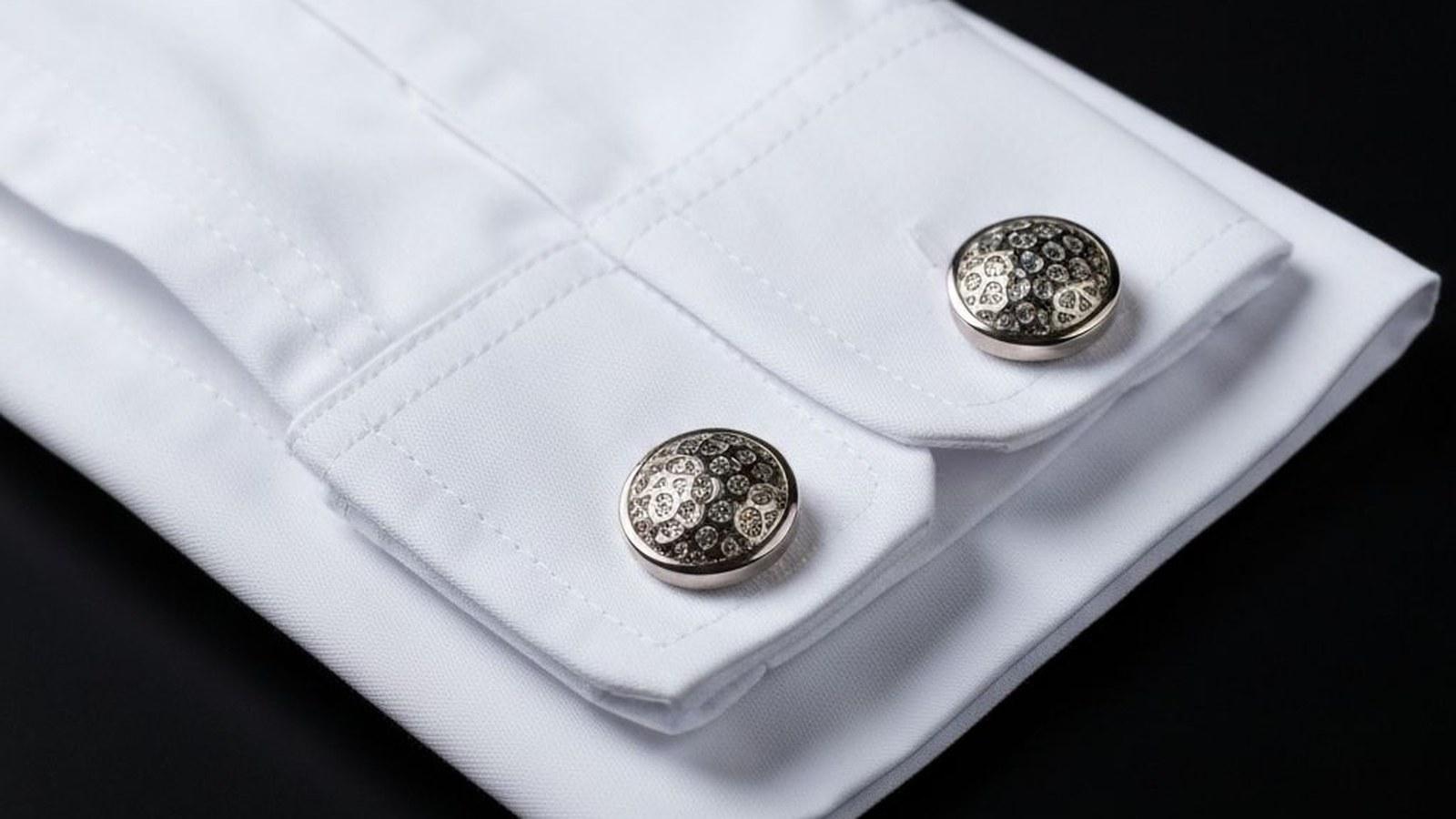
For cuff show, stand with your arms at your sides: one to one and a half centimetres of shirt cuff visible below the jacket sleeve. Less and the jacket looks too long and your hands short; more than two centimetres and it looks as though it shrank. The jacket sleeve should finish at the wrist bone, near the base of the thumb, and still show that band of cuff when you reach out to shake a hand.
Jacket length: check the knuckle, then check the seat
Two checks, and they occasionally disagree. First, standing with your hands by your sides, the front hem should fall at about the first knuckle of your thumb. Second, look at your back: the hem should cover the seat completely, without riding up over the curve of it and without stopping above it. Curl your hands loosely into fists and the hem should meet the top of the fist.
When the two rules disagree, the seat wins. A shorter man who takes the jacket up to gain height looks cropped rather than taller; a taller man who lets it drop past the knuckle looks as though he borrowed it.
Chest and waist: how much room is actually room
Button the jacket and stand square to the mirror. The front should hang flat from the button to the hem, with no X-shaped pull from the button and no bowing of the lapels away from the chest. As a rough guide, a close-cut jacket carries five to eight centimetres of ease over your measured chest; a roomier drape cut sits nearer ten. The number matters less than the tests.
Sit down. Cross your arms. Reach forward as though picking up a pen. If the lapels lift away from your chest or the button strains, there is not enough room through the chest, or the front balance is off and letting out will not fix it. Then look at your back: a horizontal roll of cloth across the small of the back means the waist is suppressed too hard, and it will be there every time you stand up from a desk.
Waist suppression is taste, not correctness. A jacket can be shaped sharply or barely at all, and both are right provided the skirt hangs clean and the vents stay shut when you walk. What is never right is a waist tight enough to pull the pockets open.
Trousers: rise first, then break
Rise decides where the trousers sit, and so how long your legs look. A traditional rise puts the waistband at or just below the navel; a lower rise sits on the hips and needs a flatter seat. Either way the waistband has to stay put. If you hitch the trousers up every time you stand, the rise is wrong or the waist is loose, and no hem will disguise it.
Next the seat and fork. Sit down: the cloth should not pull tight across the front of the thigh or cut up into you. Standing, the fork should sit close without gripping. Then the hem: it should rest on the shoe with a single soft fold at the front, or just touch the laces. A full break, where the hem puddles on the vamp, shortens the leg and, in Hong Kong humidity, presses a permanent crease into the cloth by mid-morning. At the back it should sit about a centimetre above the top of the heel. Keep the opening wide enough that the cloth falls straight from the knee over the shoe instead of clinging to the calf.
What the baste fitting can still change, and what it cannot
The first fitting is a baste: the jacket is tacked by hand with generous inlays inside the seams, no buttonholes cut, sometimes no sleeves set. Change is cheap and quick here, so this is the fitting to speak up at.
- Genuinely adjustable at baste: chest and waist suppression, jacket length, sleeve length and pitch, collar height, lapel width by a small margin; on the trousers, waist, rise, seat and length.
- Adjustable only slightly: shoulder width and slope, perhaps half a centimetre either way before the fronts have to be recut.
- Effectively fixed: armhole size and position, front-to-back balance, pocket placement beyond a centimetre, and the cloth itself.
By the second fitting you are confirming rather than deciding: hem length, a little suppression, the hang of the sleeve. After delivery you can still alter hems, waist, sleeve length and side seams, but you cannot move a shoulder without remaking the jacket. So the shoulder is the one measurement worth arguing about at the start.
Ask the tailor to show you the inlays at that first fitting: a man who can point at the seam allowance and name the number has left himself room to work.
If this is your first commission, the bespoke suit service is where the pattern begins, and the process page sets out what happens at each stage. Questions about cloth, timing and repeat orders are answered on the FAQ. Book a fitting at our Tsim Sha Tsui atelier through the contact page, and bring the shoes.