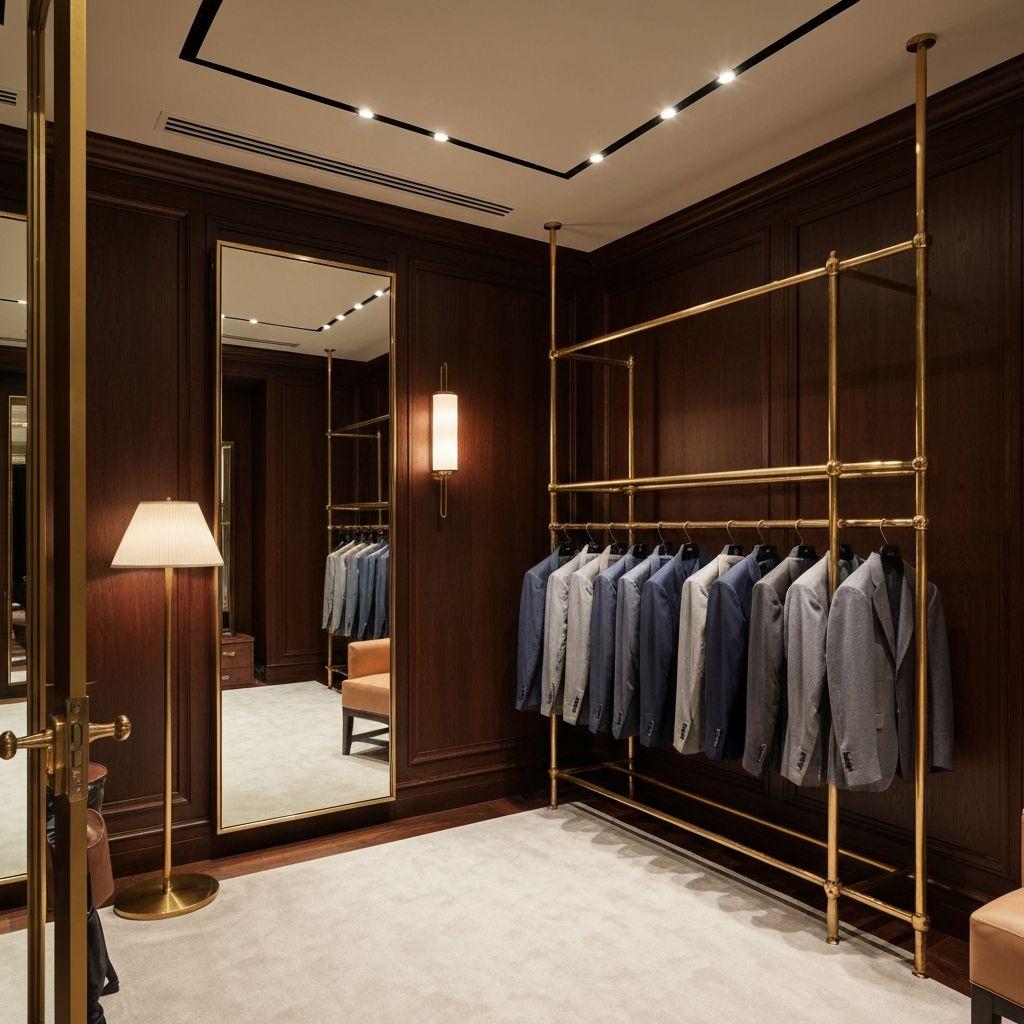
A bespoke suit in Hong Kong is cut from a paper pattern drawn for your body, then built through three fittings over six to eight weeks. What separates it from a ready-made suit that has been taken in is not the label on the cloth but the canvas inside the chest, the pattern kept in the drawer with your name on it, and the hand work between the first measurement and the last fitting.
We have cut suits this way at our Tsim Sha Tsui atelier since 1962, and the questions clients ask before they commission have barely changed: how many fittings, why it costs what it costs, and how to tell a real bespoke tailor from a shop that alters ready-made jackets. Here is the honest version of each.
What happens at the first appointment?
It starts with a conversation, not a tape measure. The tailor needs to know what the suit is for: a first suit for a banking job in Central, a wedding in December, a board presentation where you are the youngest person in the room. That answer changes the cloth, the shoulder, the lapel width and how much waist suppression is sensible.
Then the measuring. At our shop that runs past thirty measurements on the body, including the ones a chart cannot capture: how one shoulder sits lower than the other, whether you stand with the chest forward or the hips pushed forward, how the back curves, where the waist actually sits under the jacket line. These notes become part of a permanent fitting profile. If you order again in three years, we start from your pattern, not from zero.
How many fittings should a bespoke suit have?
Three touchpoints: the first baste, the second fitting, and the final. A made-to-measure suit usually has one. That difference is the whole argument for bespoke, because each fitting is a chance to correct something that only shows up once cloth is hanging on a moving body.
If a shop tells you your suit will be ready in two weeks with no fitting at all, they are not making you a bespoke suit. They are selling you a stock size with adjustments, which is a legitimate product, just not this one.
What gets decided at the baste fitting?
The first baste is the skeleton: the cloth is cut and tacked together by hand, with no canvas fixed and no buttonholes cut. It looks unfinished because it is. What the tailor reads here is balance. Does the jacket hang level front to back? Does the collar sit against the neck without a gap? Is the sleeve hanging where your arm actually falls, or is it rotated forward because the jacket was drafted for a straighter posture than yours?
Wear the shoes you intend to wear with the suit. Trouser length is decided against a shoe, not against a mirror, and a half-inch of break looks different on a loafer than on a derby. Bring the shirt you plan to wear too, since collar height changes how the jacket collar sits.
Why does the second fitting decide the shoulders?
By the second fitting the canvas is in and the suit has structure, so you can finally see the shoulder line as it will be worn. This is where the tailor checks the sleeve pitch, the chest, the waist, the hem and the trouser line together. Small things get marked: taking a quarter inch out of the back, moving a button, lifting a sleeve head.
Shoulders are the hardest thing to change later, which is why a good tailor spends the most attention on them early. If a jacket pulls across the back when you reach forward, or the sleeve drags the shoulder up when you raise your arm, that is a pattern issue and it should be solved now, not at collection.
What are you actually paying for in a bespoke suit?
Four things: the cloth, the construction, the hours, and the fittings.
- Cloth. A Super 150s from a named mill costs many times a generic worsted. Weight matters more than the number on the selvedge for Hong Kong, where you spend the day between 33-degree streets and 21-degree offices.
- Construction. A floating canvas is a separate layer of horsehair and wool stitched inside the chest, not glued to the cloth. It moulds to you over time and it is the single clearest difference between a suit that drapes and one that creases like cardboard.
- Hours. A true bespoke suit at our shop involves fifty to seventy hours of hand work: the canvas, the lapel roll, the collar, the buttonholes, the pick stitching.
- Fittings. Three appointments of an hour or more is real cost, and it is the part clients underestimate.
You can pay less, and you can pay more for a designer label with a fused chest. The price tells you little; the construction tells you everything.
How do you tell true bespoke from a re-cut ready-made suit?
Ask five questions and listen to how they are answered.
- Who cuts my pattern? A bespoke tailor cuts a paper pattern for you by hand. If the answer is that a factory drafts it from your measurements, that is made to measure.
- Can I see the pattern? A real workshop will show you the paper with your name and date on it.
- Is the chest canvas stitched or fused? Fused means glued interlining, which is fine at a lower price point but will not mould to you.
- Will the first fitting be on a baste? If the first time you see the suit it is finished, no fitting has taken place.
- Where is the work done? In-house, in Hong Kong, with the same cutter seeing you through, is a different product from work sent elsewhere.
None of these are trick questions. A shop that is honest about selling made to measure will answer them plainly.
Which cloth weight actually works in Hong Kong?
For most of the year, 250 to 280 grams is the useful range: a high-twist wool in navy or charcoal that recovers from a day of sitting and does not shine at the seat. For December and January, or for travel to a colder city, 320 grams and up gives a cleaner drape and holds a press. Linen and linen blends are for people who accept the crease as part of the look.
Avoid heavy flannel for daily wear here. It is beautiful cloth and it will be unbearable by eleven in the morning in June. We keep a library of cloths across those weights so you can feel the difference rather than read about it.
How long does the whole thing take?
Six to eight weeks for true bespoke, three to four for made to measure. Book earlier than you think you need to if the date is fixed: December weddings and the weeks before Chinese New Year are when every atelier in Tsim Sha Tsui is full, and a rushed fitting is where mistakes get locked in.
If you are commissioning your first suit, the honest advice is to leave room for a fitting you did not plan for. Most of the time it is not needed. When it is, you will be glad the calendar had space.
If you want to understand what your own pattern would look like, book a fitting at our Tsim Sha Tsui atelier and we will walk you through the cloth and the construction before you commit to anything. You can also read how the six to eight weeks run, see the men's bespoke suits we make, or check how a suit should fit before you come in.